A book, a wedding, and the women who kept things together
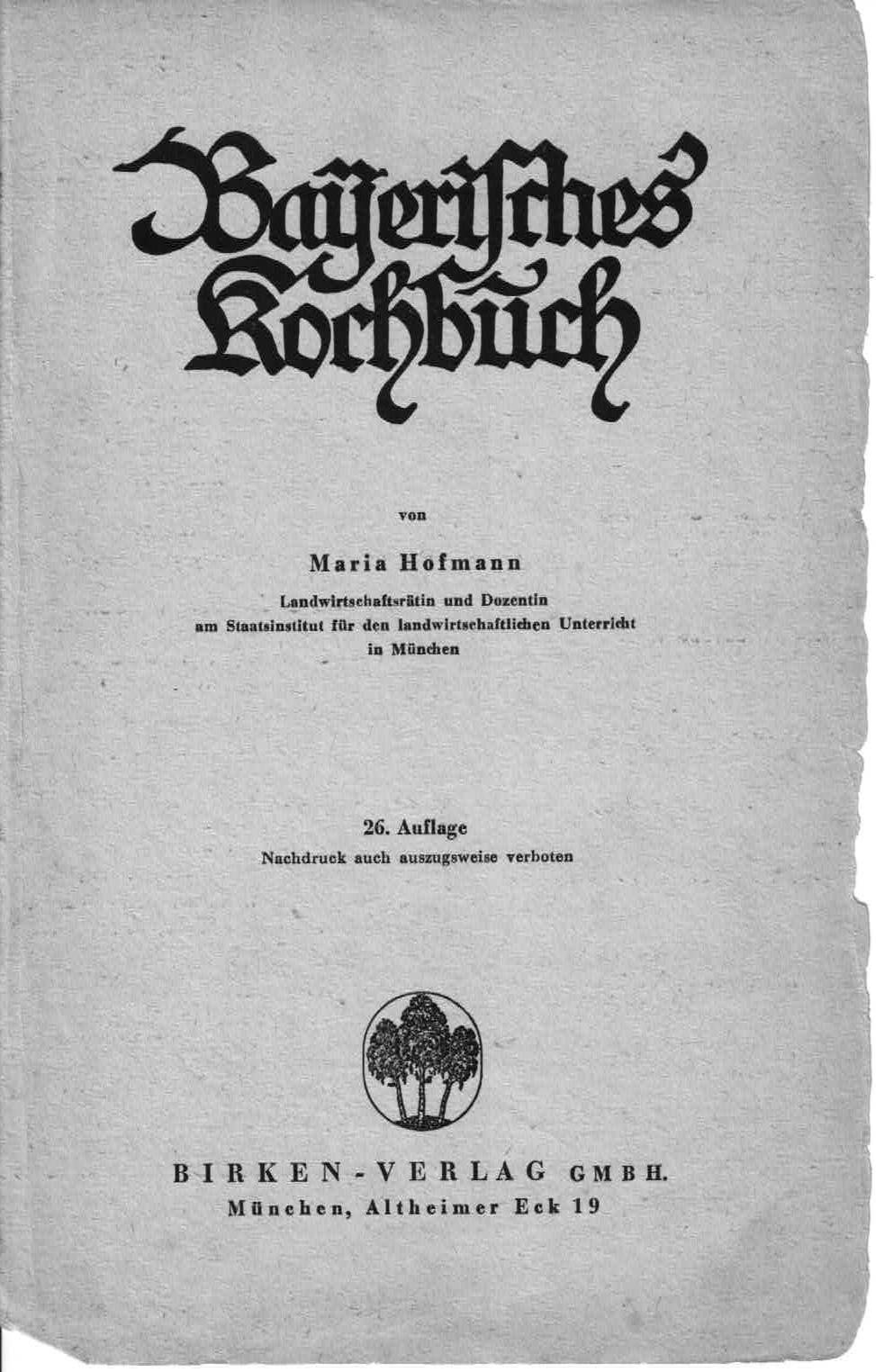
In 1956, in postwar Bavaria, my mother received a cookbook as a wedding gift. It was Bayerisches Kochbuch — Bavarian Cookbook — by Maria Hofmann, then in its 26th edition. A standard reference for German home cooks. A serious book, for a serious kitchen.
The book is written in old Fraktur typeface — the angular Gothic script that most people today cannot read. She could read it. She cooked from it for decades.
She brought it with her when she came to the United States, and she kept it her whole life. Behind her was Babette Martin — her grandmother, the steady and loving presence who supported her through a genuinely difficult young life. This project is named for her.
I am her son. I cannot read Fraktur. But I can translate it — carefully, by hand, with attention to what each dish meant in its time and place. That is what Babette's Table is: a translation project, a history project, and a cooking project, all from a single book that never leaves the house.
26th edition · Birken-Verlag, Munich · 1956
Originally given to Erna Paul as a wedding gift.
Written in printed Fraktur typeface.
About the book & English PDF volumes →